Laboratories have always been places of change. New instruments appear, new methods are developed, old processes are improved, and somehow there is always another sample that needs testing yesterday.
But recently, the pace of change feels different. We aren’t just seeing slightly better versions of the same tools. We’re seeing the way labs operate begin to shift entirely. Automation is becoming more common, sustainability is becoming more urgent, data is becoming more powerful, and global collaboration is no longer just something that happens at conferences.
Let’s have a look at some of the biggest trends already shaping the lab world.
Automation and robotics will take centre-stage
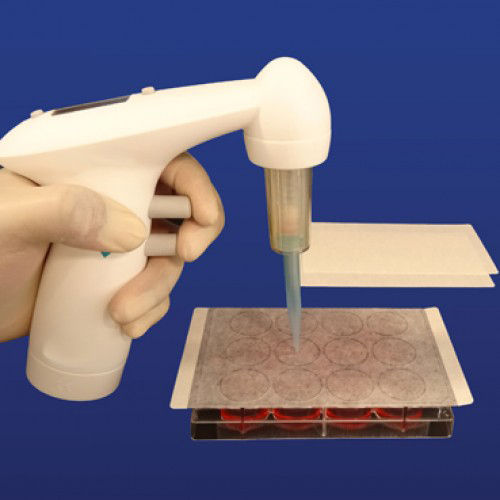
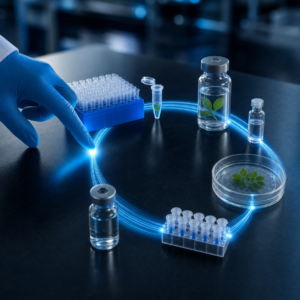 Nobody gets into science because they dream of doing the same repetitive task 500 times in a row. Pipetting, sorting, labelling, aliquoting, preparing samples, moving plates, loading instruments are important jobs, but they are also time-consuming, repetitive, and very easy to get wrong when someone is tired, rushed, or interrupted.
This is where automation is making a huge difference. Automated systems can take over many of the monotonous, repetitive steps that once needed constant human attention. It also means skilled people can spend less time repeating basic tasks and more time interpreting results, solving problems, and making decisions. The result of automation is not just faster testing, but more consistent testing. A robot doesn’t get distracted halfway through a plate, it doesn’t forget whether it added something to row G, and it doesn’t have a bad Monday morning.
Sustainability will move from “nice idea” to everyday expectation
Sustainability in laboratories is no longer just a nice thing to talk about, it’s becoming a practical requirement.
Labs use a lot of plastic, a lot of water, a lot of packaging, and a lot of single-use consumables. Obviously, some of that is unavoidable. Sterility, contamination control, and sample integrity matter. We definitely don’t think that safety and accuracy should be sacrificed for the sake of looking green, but it’s becoming clear there is still plenty of room to improve.
The scientific world is already moving in this direction. My Green Lab’s 2025 Freezer Challenge involved 3,724 labs across 36 countries and reported estimated savings of 31.6 million kWh of electricity, showing that even something as ordinary as freezer management can make a serious difference.
The challenge for many labs is that sustainable solutions are arriving faster than they can adopt them. It takes time to validate new products, change habits, update procedures, and convince everyone that the “old way” is not always the best way.
Genomics, sequencing, and eDNA will keep opening new doors
We saw the importance of genomic surveillance during the COVID era, but the story doesn’t stop there. Genomics is being used to monitor pathogens, track changes in bacteria and viruses, understand outbreaks, and strengthen public health systems. The WHO’s global genomic surveillance strategy is built around improving the use of sequencing for detecting, monitoring, and responding to public health threats.
And then of course there is eDNA. A fish swims through a stream and leaves genetic material behind, and a species can be detected without ever being seen. Sequencing and molecular testing are not only changing human health, but also how we understand the world around us.
Global focus and collaboration will become even more important
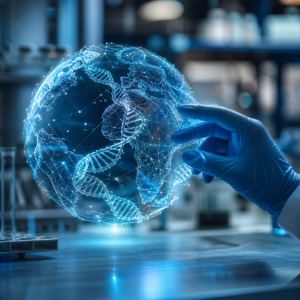 Science has never really belonged to one person, one lab, or one country. But the future will make collaboration even more important.
Disease surveillance, antimicrobial resistance, water quality, food safety, environmental monitoring, biodiversity loss, and climate-related health risks are not just local issues. Everyone understands they cross borders. So the data, methods, and responses need to cross borders too.
The modern lab is becoming part of a much larger global system. Nowadays, a sample collected in one place may contribute to a dataset used somewhere else, and a sequencing result may help identify a pattern across countries. A new method developed in one lab may quickly influence the work happening on the other side of the world! The lab bench is becoming more connected to the world than ever before.
AI and smarter data handling will become harder to ignore
Modern labs produce data, and lots of it. Every instrument, calibration, environmental log, and result creates information. It’s clear that the challenge is no longer just generating results, but managing them properly.
This is where AI, data analytics, LIMS systems, and connected instruments will become increasingly important. Labs need tools that not only store information, but that can help identify patterns, flag issues, improve traceability, and make it easier to turn raw data into something useful. AI can sort through huge amounts of data far faster than we can, helping scientists look deeper, spot patterns sooner, and see things that might otherwise be missed.
Data analytics and visualisation tools are expected to play a growing role in helping labs identify trends and improve decision-making. At the same time, the more connected laboratories become, the more important cybersecurity and data protection also become.
What does the future lab look like?
The future lab will not suddenly arrive one morning with robots everywhere and every process perfectly automated. It will happen gradually, but all these changes point in the same direction.
The laboratory of the future will be more automated, more connected, more sustainable, more data-driven, and more precise. It’ll still need skilled people, probably more than ever, but those people will be supported by better tools, systems, and workflows that allow them to focus on the work that really needs human thinking.