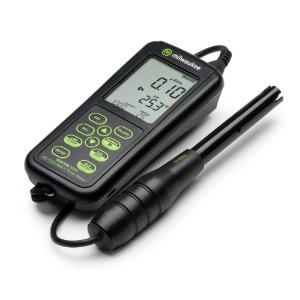
A conductivity meter (often called an EC meter) measures how easily electricity passes through a solution. Because dissolved ions carry electrical charge, conductivity is a quick way to estimate “how much ionic material is in the water” and track changes over time.
Many meters can also display TDS (ppm) and salinity. These readings are related to EC, but they’re not the same measurement. Understanding the relationship helps you choose the right meter and avoid confusion when two devices show different “ppm” numbers for the same sample.
Browse the range
What conductivity (EC) measures
EC (electrical conductivity) is a direct measurement of a solution’s ability to conduct electrical current. In most water-based samples, the EC increases as dissolved ionic content increases.
EC does not identify what the ions are. Different solutions can share a similar EC while having very different chemistry. That’s why EC is commonly used for quick checks, process monitoring, and trending rather than full composition analysis.
EC and TDS (ppm): related, but not interchangeable
TDS stands for “total dissolved solids”, typically expressed as mg/L (often shown as ppm). Most portable meters do not measure TDS directly. Instead, they measure EC and apply a conversion factor to estimate a TDS value.
- A ppm reading is an estimate based on an assumed relationship between EC and dissolved material.
- Different meters (or settings) can use different conversion factors, so two ppm readings can differ even if the EC is the same.
- If you need a true TDS value for reporting, it is determined by laboratory methods. On a meter, ppm is best treated as a practical estimate unless your method specifies a particular scale.
If consistency matters, many labs and growers standardise their reporting: either record EC directly (µS/cm or mS/cm), or ensure everyone uses the same ppm scale and calibration approach.
Salinity: what it usually means on a portable meter
Salinity readings are typically derived from conductivity using a salinity mode/scale built into the meter. Depending on the instrument, salinity may be displayed in different units or reference scales.
If you’re comparing results across sites or devices, confirm the salinity mode being used and calibrate with an appropriate standard where applicable.
Temperature and ATC: why the number changes as the sample warms or cools
Conductivity changes with temperature. If a sample warms up, its conductivity generally increases even if the dissolved ionic content is unchanged.
That’s why many conductivity meters include automatic temperature compensation (ATC). ATC corrects the reading to a reference temperature so results are more comparable. For stable results:
- Let the probe reach the sample temperature before recording.
- Use ATC correctly (and make sure the temperature sensor is working).
- Use calibration standards that match your meter and measurement range.
Measurement approach: why sensor type matters
Different conductivity sensors behave differently across low vs high conductivity ranges and in clean vs dirty samples. Portable meters often use electrode-based probes (common and effective for routine work), while other applications can benefit from sensor designs that better handle higher conductivity or more challenging sample conditions.
If you see unstable readings, slow response, or poor repeatability, it’s worth checking whether the probe style suits the sample and whether the probe needs cleaning or replacement.
Common causes of unstable or “wrong” readings
- Residue or coating on the probe (especially after nutrients, salts, or process samples)
- Using the wrong calibration standard for the meter/range
- Air bubbles around the sensing area or inconsistent immersion depth
- Temperature not stabilised, or ATC not operating as expected
- Comparing ppm readings across different conversion factors
Conductivity meters we supply
Here are a few options we stock that cover common EC/TDS/salinity workflows, from pocket testing through to portable meters with additional modes:
- Milwaukee EC59 PRO waterproof EC/TDS/temperature tester (replaceable probe)
- Milwaukee MW301 PRO conductivity meter (portable, ATC)
- Milwaukee MW302 PRO high-range conductivity meter (portable, ATC)
- Milwaukee MW306 MAX waterproof EC/TDS/NaCl/temperature logging meter
- Milwaukee MW802 PRO pH/EC/TDS combo meter with ATC
- Milwaukee pH/ORP/EC/TDS/NaCL/Temp Logging Bench Meter
Calibration solutions and accessories
Calibration and probe condition are usually the difference between “good enough” and dependable results. These are common standards and accessories we supply (choose the correct standard for your meter/range; details are listed on the product page):
- Milwaukee 84 µS/cm conductivity solution (MA9063)
- Milwaukee 1413 µS/cm conductivity solution (MA9061)
- Milwaukee 12880 µS/cm conductivity calibration solution (MA9060)
- Milwaukee 100% NaCl (salinity) solution (MA9066)
- Milwaukee lab grade EC/TDS probe (SE520) for compatible meters
- Browse calibration, maintenance & cleaning solutions
Download the Milwaukee reference guide (PDF)
For a deeper explanation of the relationship between EC, TDS and salinity (and why temperature and conversion factors matter), you can link customers to the Milwaukee reference guide here:
Understanding EC, TDS & Salinity (PDF)
Quick checklist: getting more reliable results
- Decide whether you’re reporting EC or a calculated TDS (ppm) value, and keep the same settings across your team.
- Calibrate with the correct standard for your meter and measurement range.
- Rinse between samples and clean periodically to prevent buildup.
- Let temperature stabilise, and use ATC correctly.
- Replace probes when response becomes slow or readings won’t stabilise after cleaning/calibration.