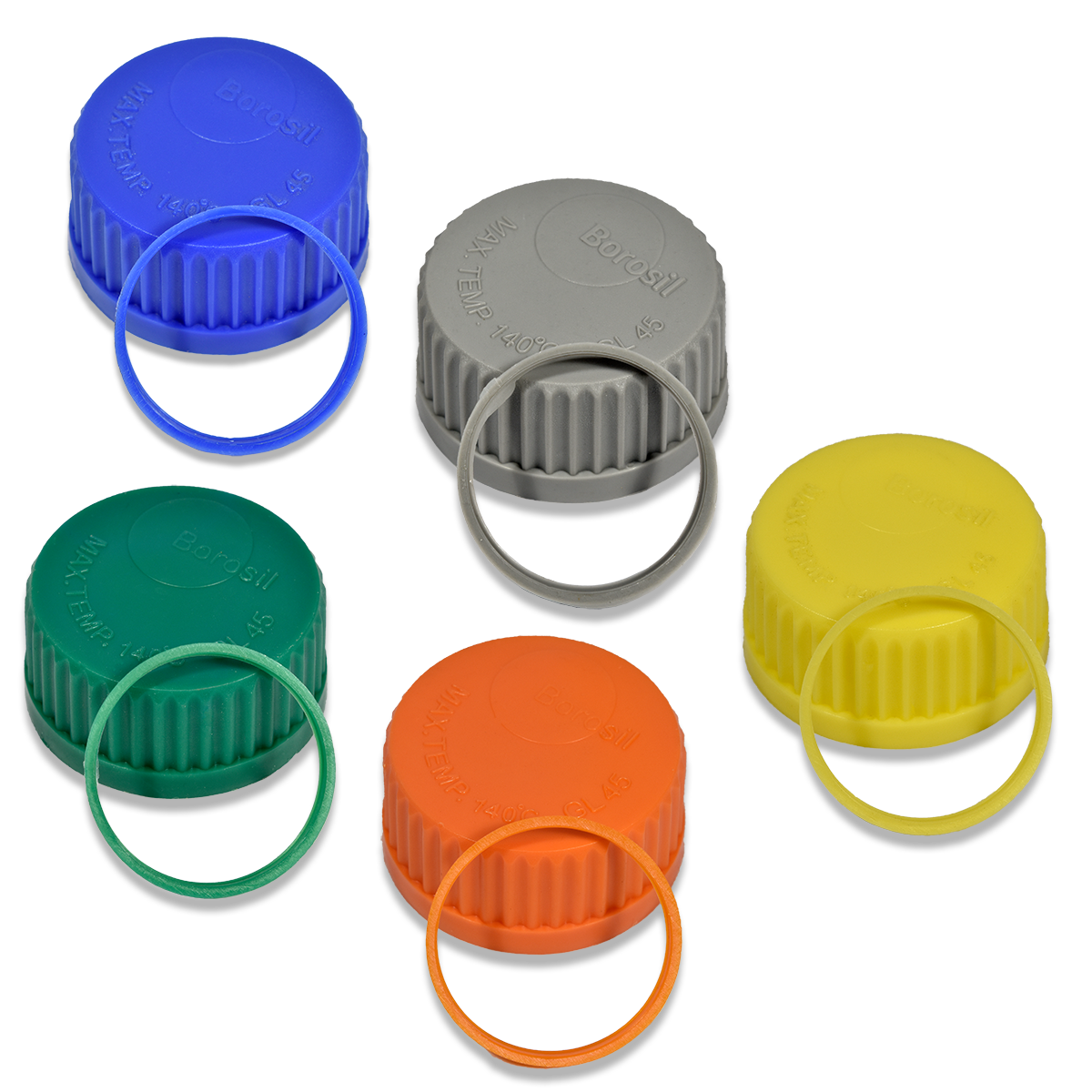
GL45 reagent bottle caps do a lot of quiet work in the lab: they seal, protect, survive repeated handling, and often go through the autoclave along with the bottle. Over time, it’s common to see a cap that started out blue fade, chalk, or shift toward a pale grey/white after chemical exposure and sterilisation cycles.
That colour change is often more than cosmetic “wear and tear”. It can be an early signal that the cap surface is being affected by heat, vapours, cleaning agents, or the specific reagent being stored. The practical fix is simple: caps are replaceable, and colour-coded replacements help keep your lab system consistent.
Browse the range
Related items:
clear glass reagent bottles,
amber glass reagent bottles,
GL45 replacement sealing rings (10 pack),
glass reagent bottles category.
What causes caps to turn white (or fade) in a working lab?
Most labs don’t expose caps to just one factor. Heat, steam, pressure changes, cleaning cycles, and chemical vapours all stack up, and the cap is usually the first component to show it. A “whitened” appearance can come from dye changes, surface changes that scatter light (a chalky look), or fine wear from handling.
- Autoclave cycles: repeated heat + steam can gradually change the cap surface finish, especially around knurling and edges where handling is constant.
- Chemical exposure (liquid or vapour): aggressive reagents, solvents, and cleaning agents can affect dyes and surface components. Vapours are easy to miss because the change is slow and cumulative.
- Oxidation and micro-surface wear: fine surface changes can create a pale look even when the base plastic hasn’t “stained”.
- Mechanical wear: frequent tightening/loosening and glove friction can make colour look uneven over time.
In-lab example: one cap, two different histories

Does colour change mean the cap has failed?
Not always. A faded cap may still seal perfectly. But colour shift is a useful trigger to check the sealing and handling “feel”, because that’s where ageing shows up first.
- Does the cap still tighten smoothly, or does it feel gritty, sticky, or uneven on the threads?
- Is the sealing surface clean and flat, without nicks, warping, or embedded residue?
- Do you see residue lines, crusting, or signs of seepage around the neck after storage?
- Has the cap become noticeably stiffer, more brittle, or easier to crack at the knurling?
If any of those checks raise doubt, replacing the cap is the simplest way to protect the reagent and avoid slow leaks, evaporation, contamination, or label damage.
Practical ways to slow down cap wear
- Don’t over-tighten. Firm is usually enough for a good seal. Over-tightening accelerates thread wear and can distort sealing surfaces over time.
- Clean external residue early. A quick wipe/rinse before the next autoclave cycle reduces baked-on residues and vapour carryover.
- Dedicate caps for harsh chemistries. If one reagent consistently “ages” caps faster, keep a dedicated cap colour for that workflow to reduce cross-exposure.
- Let caps cool naturally. Avoid applying high torque while the cap and bottle are still very hot, as plastics are more prone to distortion when stressed at elevated temperature.
When to replace: a quick checklist
- Any sign of leaking, crusting around the neck, or unexplained mass loss/evaporation
- Warping, cracking, or a cap that no longer seats squarely
- Threads that bind, jump, or feel inconsistent
- Sealing surfaces that are scratched, swollen, or permanently stained with persistent residue
- Colour change plus a noticeably chalky surface (especially if it coincides with a change in “feel”)
Why colour-coded replacement caps are useful
Colour isn’t just for looks. In many labs, cap colour becomes a simple control tool for identification and segregation. It also supports better replacement discipline: when a cap shows visible ageing, it’s easy to swap in a fresh one and keep the bottle in service.
Interlab supplies replaceable GL45 screw caps and pouring rings in multiple colours here:
GL45 screw caps & pouring rings.
Where applicable, material and temperature details are listed on the product page.
Next step
If your caps are fading, whitening, or just not sealing like they used to, replacing the cap (and checking the seal components) is usually faster than troubleshooting contamination, evaporation, or concentration drift. Keeping a couple of colours on hand also makes it easier to standardise lab storage and quickly retire ageing caps.